The Upper
Paleolithic
The Upper Paleolithic Period (beginning about
40,000 – 35,000 years ago) is characterized by the emergence of regional stone
tool industries such as the Perigordian, Aurignacian, Solutrean, and
Magdalenian of Europe, as well as other localized industries of the Old World
and the oldest known cultures of the New World. The tools typical of this period were made from very long, thin
flakes of stone (blades) and fashioned from materials like bone, antler, ivory,
and wood. The Upper Paleolithic is
marked by a variety of innovations and developments such as the appearance of
the first anatomically modern humans in Europe, more complicated structures,
further plant and animal use, elaborate burials, global migration, the
beginnings of trade, widespread use of stone blades, innovative new tools like
the atlatl and bow and arrow, the domestication of the dog, and the appearance
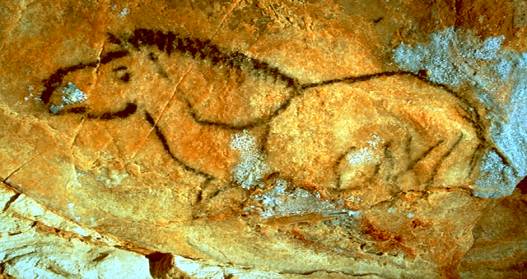
of art and decoration.